Grandpa Tree and America
This year, the United States celebrates its 250th anniversary. In recently reflecting on this, I realized one of the trees in our sugarbush may have been around for this entire history. What follows is a bit of an imagination exercise in what this tree might have “seen.” To be honest, we don’t know how old the tree is, but being 250 years old is feasible.
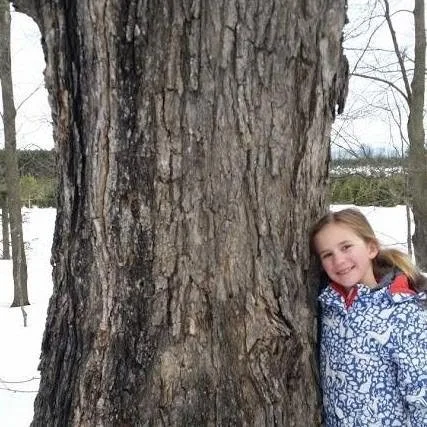
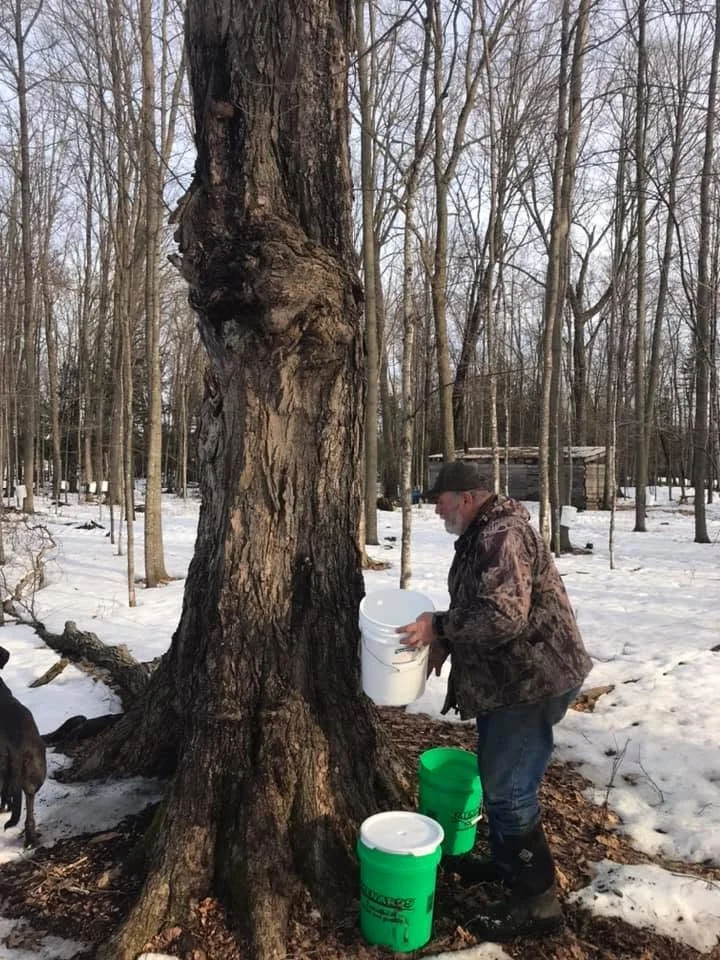
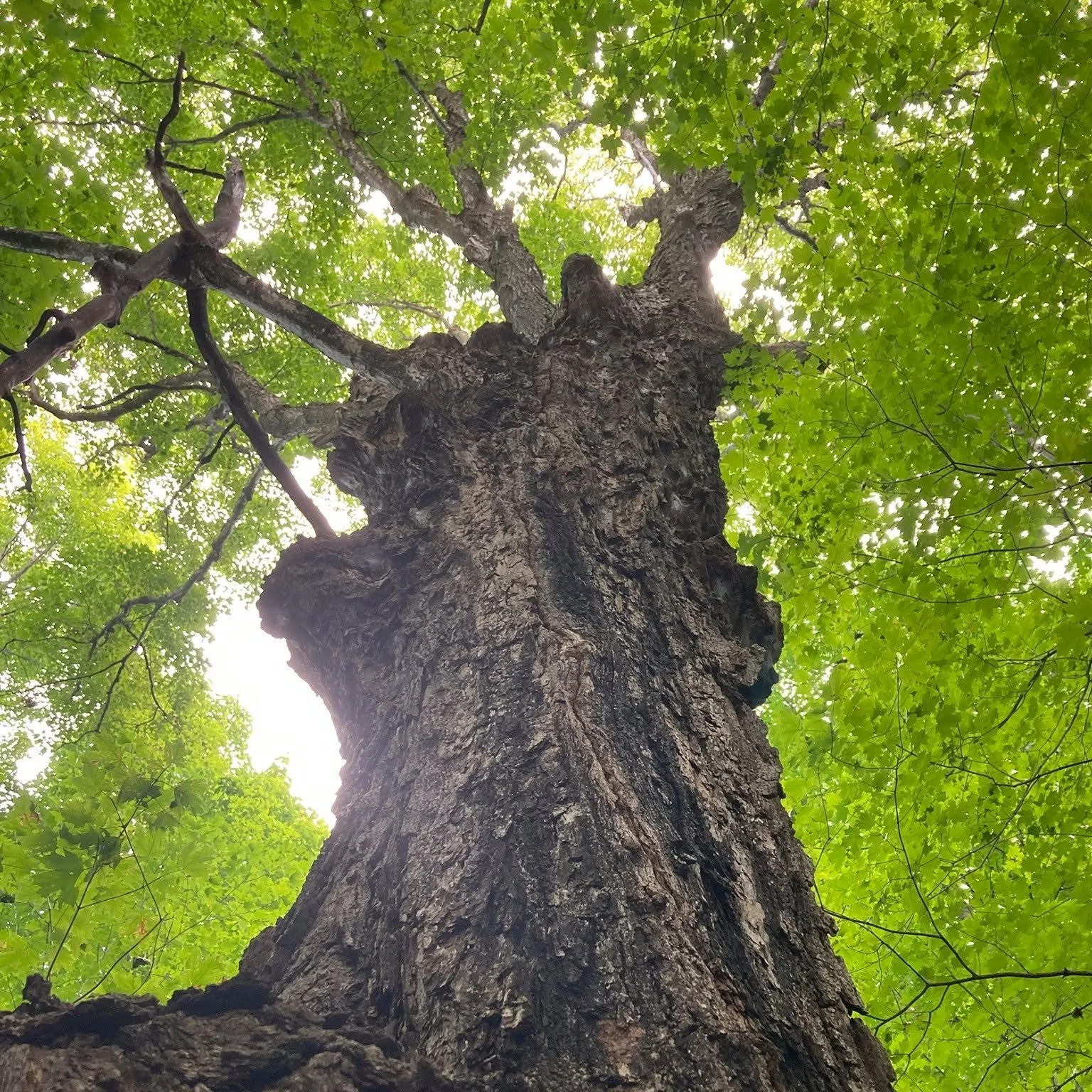
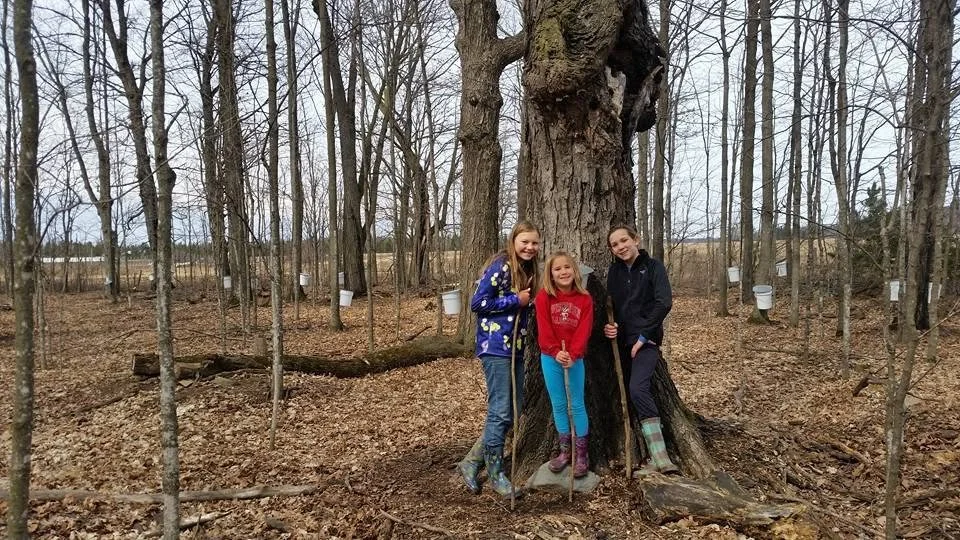
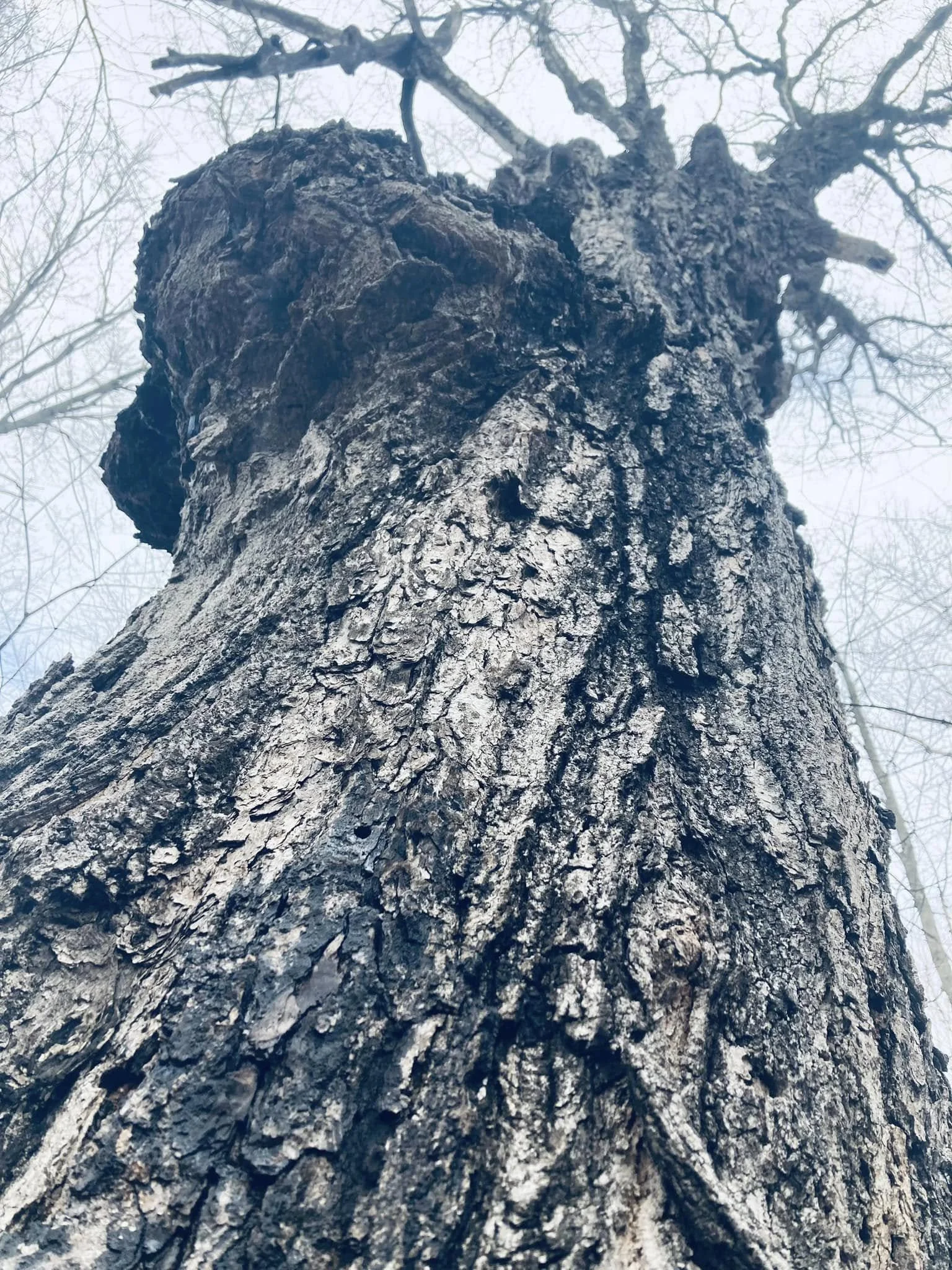
We call this tree Grandpa Tree. It’s the largest tree remaining in our sugarbush. It had some counterparts of similar age and size that were damaged or blown over during windstorms over the past 40 years. My dad remembers tapping Grandpa Tree when he was a kid, remembering that it was a big tree then, 60+ years ago. So, let’s imagine the life of this tree, placing its birth at the same year as the birth of our country, 1776.
In the summer of 1776, a maple samara twirled down to the ground from its parent tree (itself maybe growing here for hundreds of years before this). That samara landed in a perfect place in the duff of the forest floor and soon sprouted, sending a root into the ground and a stem into the air. Soon that root intersected fungal hyphae and developed a relationship with that fungus that will help it survive throughout its life. For decades this seedling hung out on the forest floor, each spring sprouting a couple leaves to capture the meager sunlight available, but mostly it survived on sugar passed to it from the mature maples through the fungal hyphae. At some point, a larger tree in the canopy died, likely blown over in a storm or struck by lightning. This created the canopy gap the seedling needed to get sunlight, and it bolted skyward. It became a sapling and then a mature tree, continuing to grow through the years.
For the first half-century of its life, Native Americans passed through the area, potentially collecting sap and making maple sugar nearby. They were primarily Menominee people, but also potentially the more recently arrived Ojibwe. In addition to sugar season, they likely passed through while hunting and gathering (I don’t believe there’s any evidence of gardens in the immediate area which would indicate more prolonged summer residencies). Also during this time, trappers and fur traders occasionally passed by The Grandpa Tree. Beginning in the early 1800s, The Grandpa Tree saw increasing European colonizers and fewer Menominee and Ojibwe people as treaties were signed and Native Americans were constrained by reservations.
During this first 50 years, the tree avoided, or mostly avoided, being browsed by the variety of animals who would eat it, primarily elk, moose, and white-tailed deer who frequented the area. Could a woodland caribou have passed by the Grandpa Tree? It’s possible. More likely, and probable, was that wolves, mountain lions, an occasional wolverine, and plenty of coyotes, foxes, fishers, and martens among many other smaller critters walked alongside it, and maybe even crawled up it. And once height reached the canopy, thousands of passenger pigeons roosted in its branches and ate its seeds.
Beginning in the mid-1800s as even more settlers arrived and Grandpa tree became part of the state of Wisconsin (1848), the trees around it were cut, all by hand with crosscut saws. First went the white pines, then all of the other larger trees. They were cut for lumber, and then in the late 1880s, they were cut to clear land for farming. Many of the forests around the tree burned after the trees were cut down, the dried “slash” (tops and unused parts of the trees) creating perfect conditions for fires. Somehow Grandpa Tree survived, potentially too small to be cut for lumber, and lucky enough to not get burned or cut to clear land for farming. By the late 1800s, many of the large mammals from its younger years no longer passed by; the elk and wolverines (and woodland caribou) were completely gone, moose, wolves, mountain lions, and fishers were nearly eliminated. Passenger pigeons no longer perched in its branches, having been hunted to extinction. However, white-tailed deer became more common, thriving in the landscape with farm crops and fewer predators.
Near the turn of the 20th century, Bohemian families began to arrive and establish homesteads. They worked to clear additional land, and they grazed cattle in areas too wet or too rugged to be farmed. The Solin family arrived on this land in 1917, joining a rural neighborhood of several farms. The area became to be known as Little Chicago given that the families all spent time in Chicago on their journey from Bohemia before arriving in the Grandpa Tree neighborhood. Fields were cleared and planted, barns and houses were built, roads were constructed. A one-room school house was even built to educate all the kids in the area.
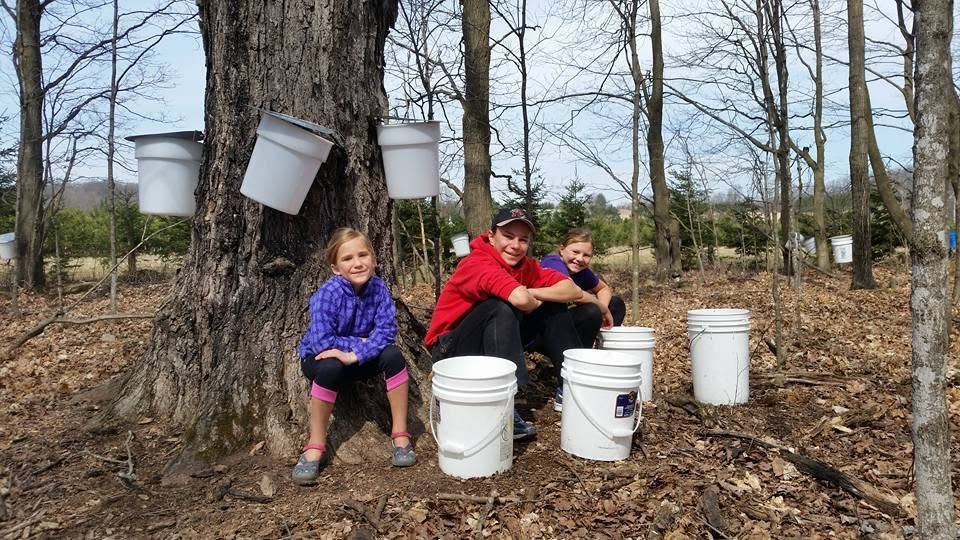
It was around this time that Grandpa Tree was first tapped for maple syrup. The sugarbush established there provided important and desired sugar that would have been expensive to get otherwise. For the next 100 years, it would continue to provide sap for our family.
Not long after its first tapping, the first engine powered equipment would have arrived on the land. Perhaps first to transport people, but then certainly to plow and plant and harvest. Soon thereafter the roar of gasoline powered chainsaws could be heard in the woods, being used to cut trees that grew up after the initial cutover. These trees were cut for the burgeoning paper industry in the state. Then came electricity. The biggest impact was that a high power transmission line was constructed near the sugarbush in the mid-1900s. At about this time, commercial jets began consistently flying high above the tree.
In the late 1980s, land that was once in crops started to be returned to forests as we planted trees on marginal farmland. By this point, many of the surrounding farms were no longer functioning, and the area became less of a neighborhood. But it did become more forested.
In the winter of 2001, a wonderful occurrence happened: 2 wolves strolled past Grandpa Tree for the first time in nearly 100 years. Not long after, they brought their litter of pups through the sugarbush. Unfortunately, they wouldn’t live there long as they found cattle to be easy prey to feed their young (they were live trapped and moved onto the Menominee Reservation).
More recently, cell phones became a common sight next to Grandpa Tree. It’s the most photographed tree in the sugarbush with good reason, it’s a magnificent tree that has experienced and given a lot during its life, a life that has paralleled that of the United States. It endured the colonization and settlement of the land. It grew up during a time of stable climate and when natural cycles and processes were predominant on the landscape. It now lives at a time of rapidly changing climate, when human forces dominate the landscape and livestock are more abundant than wildlife. And yet, Grandpa Tree persists, continuing to capture sunlight, provide habitat for wildlife, produce oxygen for us all, help build soil, and share some sap with us. It’s representative of the resilience and beauty of the natural world.
Someday, maybe, as a country we’ll become mature and wise enough to figure out how to live as well in our place - to give back as much or more than we take, to live in community, to provide for others - as Grandpa Tree has.